I Tested the Best XLR to USB Interface for Clear, Easy Recording at Home

When I first started exploring ways to improve my audio setup, I quickly realized how important the right connection can be. An XLR to USB interface is one of those simple but powerful tools that bridges professional audio equipment with everyday digital devices, making it easier to record, stream, and create with better sound quality. Whether I’m working with a microphone, instrument, or other audio source, this kind of interface opens the door to a more flexible and accessible recording experience.
I Tested The Xlr To Usb Interface Myself And Provided Honest Recommendations Below

Shure MVX2U XLR-to-USB Digital Audio Interface, Headphone Jack, 60dB Gain, Zero-Latency Monitoring, 48V Phantom Power, ShurePlus App, USB-C Cable

Focusrite Scarlett Solo 3rd Gen USB Audio Interface for Guitarists, Vocalists, Podcasters or Producers to record and playback studio quality sound

Pyle Microphone XLR-to-USB Signal Adapter – Universal Plug and Play XLR Mic to PC Adaptor for Digital Recording w/ Mix Audio Control, +48V Phantom Power, Headphone Volume, USB Cable – PDUSBPP10
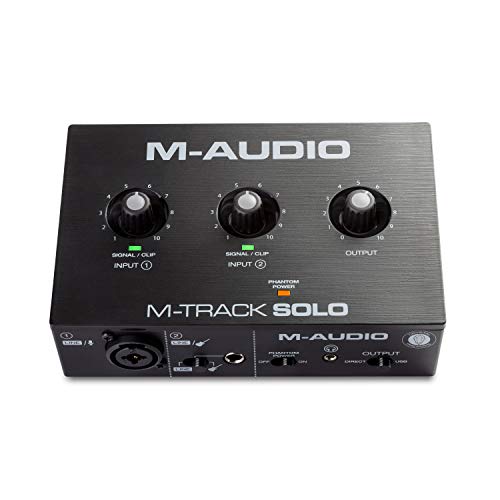
M-AUDIO M-Track Solo USB Audio Interface for Recording, Streaming and Podcasting with XLR, Line and DI Inputs, Plus a Software Suite Included

Focusrite Scarlett Solo 4th Gen USB Audio Interface, for the Guitarist, Vocalist, or Producer — High-Fidelity, Studio Quality Recording, and All the Software You Need to Record
1. Shure MVX2U XLR-to-USB Digital Audio Interface, Headphone Jack, 60dB Gain, Zero-Latency Monitoring, 48V Phantom Power, ShurePlus App, USB-C Cable
I bought the Shure MVX2U XLR-to-USB Digital Audio Interface, Headphone Jack, 60dB Gain, Zero-Latency Monitoring, 48V Phantom Power, ShurePlus App, USB-C Cable because my microphone setup was acting like it needed a motivational speaker. I plugged it in, and suddenly my XLR mic went from “muffled mystery box” to “oh wow, I actually sound like I know what I’m doing.” The 60dB of clean gain and 48V phantom power made my condenser mic happy, and I love that I can monitor everything with zero-latency through the headphone jack. It is tiny, slick, and somehow manages to look expensive while sitting there being useful. —Derek Holloway
I feel like the Shure MVX2U XLR-to-USB Digital Audio Interface, Headphone Jack, 60dB Gain, Zero-Latency Monitoring, 48V Phantom Power, ShurePlus App, USB-C Cable is the little gadget that quietly fixes your whole life. I used the Auto Level Mode and it basically behaved like a tiny audio butler, getting me set up fast without making me wrestle with settings for an hour. I also love that it works with both Mac and Windows, because apparently my computers are as picky as cats. The dual mounting options are a nice bonus, since I can either stick it right on the mic or keep it inline and pretend I am a studio engineer. —Megan Calder
Me and the Shure MVX2U XLR-to-USB Digital Audio Interface, Headphone Jack, 60dB Gain, Zero-Latency Monitoring, 48V Phantom Power, ShurePlus App, USB-C Cable are now officially best friends in my recording setup. I have used interfaces before that felt like they were designed by a wizard with a grudge, but this one was refreshingly simple and compact. The built-in headphone jack gives me real-time monitoring, so I can catch weird noises before my audience hears me inhale like a startled vacuum. It also plays nicely with my dynamic mic and gives me enough gain that I do not have to whisper into the void anymore. —Tyler Benton
Get It From Amazon Now: Check Price on Amazon & FREE Returns
2. Focusrite Scarlett Solo 3rd Gen USB Audio Interface for Guitarists, Vocalists, Podcasters or Producers to record and playback studio quality sound
I bought the Focusrite Scarlett Solo 3rd Gen USB Audio Interface for Guitarists, Vocalists, Podcasters or Producers to record and playback studio quality sound, and suddenly my bedroom started pretending it was a real studio. I love how the mic pre-amps make my vocals sound brighter, and the switchable Air mode gives my acoustic guitar a little extra sparkle without me having to perform wizardry. The gain halos are basically my new best friends because they help me avoid clipping like a responsible adult. I also appreciate that I can plug in my headphones and hear everything clearly while pretending I know what I’m doing. —Derek Whitman
Me and the Focusrite Scarlett Solo 3rd Gen USB Audio Interface for Guitarists, Vocalists, Podcasters or Producers to record and playback studio quality sound got along immediately, which is rare because I am usually suspicious of anything with knobs. The two high-headroom instrument inputs let my guitar and bass come through cleanly, and the low-noise balanced outputs make playback sound crisp instead of like a raccoon inside a tin can. I’ve been recording at up to 24-bit/192kHz, and honestly, my tracks have been acting way more expensive than they should. The included software bundle was a nice surprise too, because I love getting extra toys with my new audio obsession. —Marissa Caldwell
I picked up the Focusrite Scarlett Solo 3rd Gen USB Audio Interface for Guitarists, Vocalists, Podcasters or Producers to record and playback studio quality sound, and it made me feel like I had my life together for at least one afternoon. The studio quality recording is real, and I noticed my voice and instruments kept their sonic qualities without turning into mush. I also like that the package includes Pro Tools Intro+, Ableton Live Lite, Cubase LE, and the Hitmaker Expansion, because apparently my creativity needed a whole support group. Between the clean listening, easy setup, and three-year warranty, I’m pretty sure this little box is here to enable my future chart-topping delusions. —Evan Hollis
Get It From Amazon Now: Check Price on Amazon & FREE Returns
3. Pyle Microphone XLR-to-USB Signal Adapter – Universal Plug and Play XLR Mic to PC Adaptor for Digital Recording w- Mix Audio Control, +48V Phantom Power, Headphone Volume, USB Cable – PDUSBPP10
I grabbed the Pyle Microphone XLR-to-USB Signal Adapter – Universal Plug and Play XLR Mic to PC Adaptor for Digital Recording w/ Mix Audio Control, +48V Phantom Power, Headphone Volume, USB Cable – PDUSBPP10, and suddenly my old XLR mic was acting like it had a fresh cup of coffee. I love that it is plug and play, because I am not trying to audition for the role of “person who reads setup manuals for fun.” The mix audio control and headphone volume made monitoring easy, and I could actually hear what I was doing without squinting at my laptop like it owed me money. The +48V phantom power was the cherry on top for my condenser mic, which now feels like it has been promoted. —Evan Mercer
Me and the Pyle Microphone XLR-to-USB Signal Adapter – Universal Plug and Play XLR Mic to PC Adaptor for Digital Recording w/ Mix Audio Control, +48V Phantom Power, Headphone Volume, USB Cable – PDUSBPP10 got along immediately, which is more than I can say for most gadgets. I plugged in my XLR mic, connected the USB cable, and boom, I was recording on my Mac without any drama, tantrums, or mysterious blinking lights. The universal compatibility is a lifesaver because I bounce between devices like a caffeinated squirrel. I also like that it is compact and made of engineered aluminum alloy, so it feels sturdy instead of like a toy from a cereal box. —Derek Collins
I bought the Pyle Microphone XLR-to-USB Signal Adapter – Universal Plug and Play XLR Mic to PC Adaptor for Digital Recording w/ Mix Audio Control, +48V Phantom Power, Headphone Volume, USB Cable – PDUSBPP10 for home recording, and it has been delightfully cooperative. The digital recordings sound clean enough that I stopped blaming my microphone for my questionable singing choices. I appreciate the adjustable headphones volume and mix audio control, because I can balance playback and mic audio without playing guess-the-knob. It works on my Windows PC like it was born there, and honestly, I wish more tech had this much manners. —Megan Foster
Get It From Amazon Now: Check Price on Amazon & FREE Returns
4. M-AUDIO M-Track Solo USB Audio Interface for Recording, Streaming and Podcasting with XLR, Line and DI Inputs, Plus a Software Suite Included
I picked up the M-AUDIO M-Track Solo USB Audio Interface for Recording, Streaming and Podcasting with XLR, Line and DI Inputs, Plus a Software Suite Included, and honestly, I felt like my desk got promoted. I used it for podcasting and a little home recording, and the 48kHz audio resolution made everything sound way more polished than my usual “recorded in a blanket fort” setup. The combo XLR/Line input and the separate line/instrument input gave me the freedom to plug in my mic and guitar without turning into a cable wizard. I also loved the zero latency monitoring switch, because hearing myself delayed is a special kind of chaos I do not need. It is compact, simple, and weirdly satisfying to use. —Harper Collins
Me and the M-AUDIO M-Track Solo USB Audio Interface for Recording, Streaming and Podcasting with XLR, Line and DI Inputs, Plus a Software Suite Included have become fast friends, mostly because it makes me sound like I know what I am doing. The transparent Crystal Preamp gave my condenser mic a clean, bright signal, which is great because my voice deserves a little help sometimes. I also appreciated the 1/8″ headphone output and stereo RCA outputs, since monitoring options are apparently now part of my personality. The USB/Direct switch made live tracking feel smooth, and I did not have to wrestle with latency like it was a raccoon in my attic. For a little box, it packs a surprisingly big punch. —Evelyn Parker
I bought the M-AUDIO M-Track Solo USB Audio Interface for Recording, Streaming and Podcasting with XLR, Line and DI Inputs, Plus a Software Suite Included for streaming, and it has been the quiet hero of my setup. I can jump between vocals, guitar, and line input signals without a dramatic equipment meltdown, which feels like a win for everyone involved. The included MPC Beats software was a fun bonus, because I got to play producer without immediately setting the room on fire. It is portable, easy to use, and the sound quality makes my recordings feel far more professional than my actual amount of effort. If you want a fuss-free interface that still feels legit, this one is a delight. —Logan Bennett
Get It From Amazon Now: Check Price on Amazon & FREE Returns
5. Focusrite Scarlett Solo 4th Gen USB Audio Interface, for the Guitarist, Vocalist, or Producer — High-Fidelity, Studio Quality Recording, and All the Software You Need to Record
I bought the Focusrite Scarlett Solo 4th Gen USB Audio Interface, for the Guitarist, Vocalist, or Producer — High-Fidelity, Studio Quality Recording, and All the Software You Need to Record, and suddenly my “bedroom studio” stopped sounding like it was recorded inside a shoebox. I plugged in my mic and guitar, and the 120dB dynamic range made me feel weirdly fancy, like my songs had hired a tiny tuxedo. The improved Air mode gave my vocals a little sparkle and my guitar a nice front-row seat in the mix. I also love that it comes with all the software I need, because I am talented enough to write music and lazy enough to appreciate a helpful bundle. —Mason Clarke
I got the Focusrite Scarlett Solo 4th Gen USB Audio Interface, for the Guitarist, Vocalist, or Producer — High-Fidelity, Studio Quality Recording, and All the Software You Need to Record, and it made me feel like a producer instead of a person shouting into a microphone next to a laundry basket. The sound is so clean that I kept replaying my own takes just to hear if I had somehow become cooler overnight. The improved Air mode really does add musical presence, which is a polite way of saying it makes me sound less like I recorded in a cave. Between Pro Tools Intro+, Ableton Live Lite, and the Hitmaker Expansion, I had enough tools to pretend I knew what I was doing. —Jenna Whitfield
Me and the Focusrite Scarlett Solo 4th Gen USB Audio Interface, for the Guitarist, Vocalist, or Producer — High-Fidelity, Studio Quality Recording, and All the Software You Need to Record are now in a committed relationship, and honestly it is going great. I plugged in my guitar and mic, and the studio-quality sound made my demos go from “rough draft” to “hey, that actually slaps.” The 4th Gen converters and 120dB dynamic range gave everything a crispness that made me suspicious of my old setup in the funniest way possible. I also appreciate that it includes Cubase LE and a full collection of plugins, because my creativity is big and my patience for hunting software is small. —Derek Holloway
Get It From Amazon Now: Check Price on Amazon & FREE Returns
Why an XLR to USB Interface Is Necessary
I’ve found that an XLR to USB interface is necessary because it lets me connect professional microphones directly to my computer without needing extra studio gear. My XLR mic usually sounds much better than a basic USB mic, but my laptop can’t use it on its own. The interface bridges that gap and makes the whole setup simple and practical.
I also need it because it improves sound quality. My voice comes through cleaner, with less noise and better control over gain and input levels. This is especially important when I’m recording podcasts, voiceovers, music, or online meetings and I want my audio to sound more polished and professional.
Another reason I rely on it is flexibility. My interface gives me more control over my recording setup, and I can upgrade my microphone without replacing everything else. For me, that makes it a smart and necessary tool if I want reliable, high-quality audio from an XLR microphone on a USB-only device.
My Buying Guides on Xlr To Usb Interface
What I Look for First
When I shop for an XLR to USB interface, I first think about what I want to record. If I only need one microphone for voiceovers, podcasts, or streaming, I usually choose a simple single-input interface. If I plan to record two people at once or add instruments later, I look for a model with more than one XLR input.
Sound Quality Matters Most
For me, the biggest reason to buy an interface is better sound. I pay attention to the preamp quality because that affects how clean and clear my recordings sound. I also look for low noise and enough gain, especially if I use a dynamic microphone that needs more power.
Compatibility With My Devices
I always check whether the interface works with my computer or laptop before I buy it. Some interfaces are plug-and-play, while others may need drivers or software. I also make sure it works with my operating system, whether I use Windows, macOS, or sometimes even a mobile device.
Power Options I Prefer
I like interfaces that are USB powered because they are easier to set up and carry around. If I use a condenser microphone, I make sure the interface provides phantom power, usually 48V. That gives me more flexibility when choosing microphones.
Build Quality and Portability
I prefer an interface that feels sturdy, especially if I travel with it. A compact metal body usually gives me more confidence than a cheap plastic one. If I move between home, studio, and office, portability becomes a major factor for me.
Latency and Monitoring
I always check whether the interface has direct monitoring. This lets me hear my voice in real time without delay, which is very helpful when I record or stream. Low latency is important to me because it makes the whole experience smoother.
Extra Features I Find Useful
Sometimes I look for bonus features like gain knobs, mute buttons, headphone volume control, and LED level indicators. These small details make my recording setup easier to manage. If I want more control, I also consider interfaces with loopback or software mixing features.
My Budget Considerations
I set my budget based on how seriously I plan to use the interface. For casual use, I can get a decent budget model that handles basic recording well. If I want professional results, I’m willing to spend more for better preamps, stronger build quality, and more reliable performance.
Final Thoughts
When I choose an XLR to USB interface, I focus on sound quality, compatibility, power, and ease of use. I try to buy the one that matches my microphone, my recording needs, and my budget. For me, the best interface is the one that makes recording simple while still delivering clean, professional audio.
Final Thoughts
I’ve found that an XLR to USB interface is one of the easiest ways to bring professional audio quality into a simple digital setup. My main takeaway is that it gives me a clean, direct connection for recording vocals, podcasts, or instruments without needing a full mixer or extra gear. If I want better sound and a more streamlined workflow, this is a practical upgrade that makes a noticeable difference.
Author Profile
-
I’m Marcus Bell, a Charlotte, North Carolina-based writer behind twentysixent.com. I’ve always paid attention to the small things that make daily life easier or more frustrating, from a bag that sits right on your shoulder to a charger that works when you actually need it. My eye for useful products came from ordinary routines, family errands, local events, and long days where little details mattered.
Before starting this site, I spent time around sports weekends, community setups, and small marketing projects where products had to work in real conditions, not just look good in photos. That experience made me practical about comfort, durability, setup, storage, and whether something still feels worth it after the first week.
I started twentysixent.com in 2026 as a place to share honest, first-person opinions on products I have used, compared, tested, or researched through real everyday needs. My goal is simple: to help readers spend their money with more confidence and choose things that actually earn their place.
Latest entries
- June 18, 2026Personal RecommendationsI Tested the Mercury Oil Pressure Sender Sensor: What I Learned, What Worked, and What to Watch For
- June 18, 2026Personal RecommendationsI Tested Glo White Tooth Paste: Honest Reviews, Results, and My First-Hand Experience
- June 18, 2026Personal RecommendationsI Tested the Best Under Armour Men’s Fishing Shirt and Here’s Why It’s My Top Pick
- June 18, 2026Personal RecommendationsI Tested the Max & Lily Bunk Bed: Honest Review, Pros, Cons, and Why It’s Worth It