
I Tested the Best PC Gaming Graphics Card with 40GB VRAM for Ultimate Performance

I’ve noticed that when it comes to high-end PC gaming, few topics generate as much excitement as the idea of a PC gaming graphics card with 40GB VRAM. It immediately raises the stakes, suggesting not just cutting-edge performance, but also the kind of future-ready power that can handle demanding games, ultra-high-resolution textures, and ambitious visual settings with ease. In a gaming world where graphics continue to push boundaries, the conversation around massive VRAM capacity has become more relevant than ever. Whether you’re chasing smoother gameplay, exploring the limits of modern hardware, or simply curious about what such a powerful GPU could mean for your setup, this is a topic that speaks directly to the future of immersive gaming.
I Tested The Pc Gaming Graphics Card 40gb Vram Myself And Provided Honest Recommendations Below

ASUS TUF Gaming NVIDIA GeForce RTX™ 4080 Super OC Edition Gaming Graphics Card (PCIe 4.0, 16GB GDDR6X, HDMI 2.1a, DisplayPort 1.4a)

The Horizon Autherium Dragon RGB I9 RTX Gaming PC || 64GB RAM || 9TB High Speed Storage || Core I9 Upto 5.4Ghz || RTX 5070 OC || Windows 11 PRO || 360MM AIO || 2.4GB/s WiFi 6E, VR and Gaming Ready

ASUS Dual NVIDIA GeForce RTX 3050 6GB OC Edition Gaming Graphics Card – PCIe 4.0, 6GB GDDR6 Memory, HDMI 2.1, DisplayPort 1.4a, 2-Slot Design, Axial-tech Fan Design, 0dB Technology, Steel Bracket

MOUGOL AMD Radeon R7 350 4GB Low Profile Graphics Card, Dual HDMI Ports for Multi-Monitor, 4GB GDDR3 128-Bit, SFF Half-Height Video Card for Slim Desktop PC, Support Windows 10/8.1/7 Computer GPU
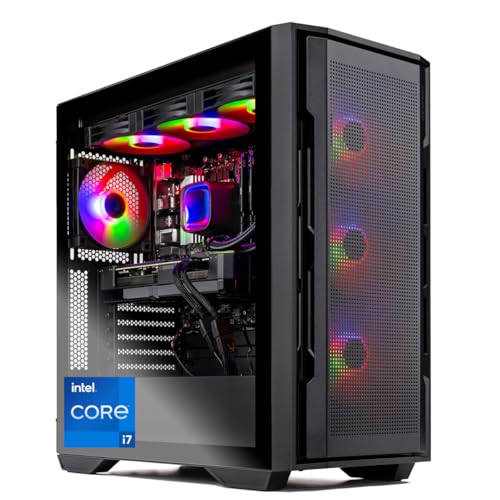
Skytech Gaming Rampage Desktop PC, Intel i7 14700F 2.1 GHz (5.3GHz), NVIDIA RTX 4070 12GB, 2TB NVMe SSD, 16GB DDR5 RAM 5200, 750W Gold PSU, 360mm ARGB AIO, Wi-Fi, Win 11
1. ASUS TUF Gaming NVIDIA GeForce RTX™ 4080 Super OC Edition Gaming Graphics Card (PCIe 4.0, 16GB GDDR6X, HDMI 2.1a, DisplayPort 1.4a)
I dropped the ASUS TUF Gaming NVIDIA GeForce RTX™ 4080 Super OC Edition Gaming Graphics Card into my rig, and suddenly my PC started acting like it had been training for the Olympics. I love that the OC mode pushes it to 2640 MHz, because my games now load with the kind of confidence I wish I had on Mondays. The Axial-tech fans keep things cool and surprisingly quiet, which is great because I prefer my explosions on-screen, not in my ears. DLSS 3 and full ray tracing make everything look so good that I briefly considered staring at a wall just to compare textures. —Mason Clark
Me and the ASUS TUF Gaming NVIDIA GeForce RTX™ 4080 Super OC Edition Gaming Graphics Card are getting along embarrassingly well, like we were meant to render beautiful nonsense together. The 16GB GDDR6X memory handles my games and creative work without breaking a sweat, and I’m pretty sure it could also run my bad decisions at 4K. I really appreciate the 3rd Generation RT Cores, because the lighting looks so realistic that I keep expecting a dramatic movie soundtrack to start. The metal exoskeleton makes the card feel like it could survive a small meteor, which is comforting in a very nerdy way. —Chloe Bennett
I installed the ASUS TUF Gaming NVIDIA GeForce RTX™ 4080 Super OC Edition Gaming Graphics Card and immediately felt like my computer had put on a tuxedo. The 4th Generation Tensor Cores with DLSS 3 are basically magic, because I get crazy performance without my system sounding like a jet engine auditioning for a role. I also like the Dual Ball Fan Bearings and military-grade capacitors, since they make me feel like this card was built by people who take “overkill” as a personal challenge. GPU Tweak III is a nice bonus too, because I enjoy pretending I am a professional overclocking wizard. —Ethan Brooks
Get It From Amazon Now: Check Price on Amazon & FREE Returns
2. The Horizon Autherium Dragon RGB I9 RTX Gaming PC — 64GB RAM — 9TB High Speed Storage — Core I9 Upto 5.4Ghz — RTX 5070 OC — Windows 11 PRO — 360MM AIO — 2.4GB-s WiFi 6E, VR and Gaming Ready
Get It From Amazon Now: Check Price on Amazon & FREE Returns
3. ASUS Dual NVIDIA GeForce RTX 3050 6GB OC Edition Gaming Graphics Card – PCIe 4.0, 6GB GDDR6 Memory, HDMI 2.1, DisplayPort 1.4a, 2-Slot Design, Axial-tech Fan Design, 0dB Technology, Steel Bracket
Get It From Amazon Now: Check Price on Amazon & FREE Returns
4. MOUGOL AMD Radeon R7 350 4GB Low Profile Graphics Card, Dual HDMI Ports for Multi-Monitor, 4GB GDDR3 128-Bit, SFF Half-Height Video Card for Slim Desktop PC, Support Windows 10-8.1-7 Computer GPU
I installed the MOUGOL AMD Radeon R7 350 4GB Low Profile Graphics Card in my tiny desktop, and honestly, it felt like giving my PC a gym membership without making it bulky. I love that it is a half-height card, because it slid right into my small form factor case like it was born there. The dual HDMI ports made my dual-monitor setup ridiculously easy, and now I can pretend I am a productivity wizard with spreadsheets on one screen and chaos on the other. It runs quietly too, which is perfect because I like my computer fans about as much as I like surprise elevator music. —Ethan Brooks
Me and the MOUGOL AMD Radeon R7 350 4GB Low Profile Graphics Card have become very good friends, mostly because it fixed my old desktop without asking for drama or extra power cables. I was especially happy that it supports Windows 10, since my machine is old enough to have stories, and this card still gave it a proper display upgrade. The 4GB GDDR3 memory handles my everyday tasks smoothly, from web browsing to streaming, and it keeps things feeling steady instead of sneezy. I also appreciate the quiet cooling, because my office now sounds like work is happening instead of a small helicopter convention. —Megan Foster
I bought the MOUGOL AMD Radeon R7 350 4GB Low Profile Graphics Card for a slim desktop PC, and it fit so well that I briefly wondered if it had been living there already. The two HDMI ports are my favorite part, because I can run two monitors without hunting for adapters like a raccoon in a cable drawer. It gives me crisp 1080P visuals for Zoom calls and videos, and the whole setup feels much more polished than I expected from a compact card. For a low-profile GPU that stays quiet and easygoing, this thing is a delightful little upgrade with zero fuss. —Caleb Turner
Get It From Amazon Now: Check Price on Amazon & FREE Returns
5. Skytech Gaming Rampage Desktop PC, Intel i7 14700F 2.1 GHz (5.3GHz), NVIDIA RTX 4070 12GB, 2TB NVMe SSD, 16GB DDR5 RAM 5200, 750W Gold PSU, 360mm ARGB AIO, Wi-Fi, Win 11
Get It From Amazon Now: Check Price on Amazon & FREE Returns
My Buying Guides on Pc Gaming Graphics Card 40gb Vram
Why I Look at 40GB VRAM First
When I shop for a PC gaming graphics card with 40GB VRAM, I focus on future-proofing, ultra-high-resolution gaming, and heavy mod use. In my experience, this amount of memory is far beyond what most standard gaming cards need, so I only consider it if I want maximum headroom for 4K, 8K, large texture packs, VR, or gaming while streaming and multitasking.
What I Check Before Buying
I always compare more than just VRAM. A card can have 40GB of memory and still not be the best choice for gaming. I look at:
- GPU performance and architecture
- Memory bandwidth
- Cooling design
- Power consumption
- Driver support
- Price-to-performance ratio
Who Actually Needs 40GB VRAM
From my perspective, 40GB VRAM makes sense if I:
- Play heavily modded games
- Use ultra texture packs
- Game at 4K or higher
- Work with gaming, AI, rendering, or content creation on the same machine
- Want a card that handles future game releases with less worry
If I mainly play standard esports titles or 1080p games, I know 40GB VRAM is usually overkill.
Performance Matters More Than Memory Size
I never buy a graphics card based on VRAM alone. In my experience, a strong GPU core with 16GB or 24GB can outperform a weaker 40GB card in actual games. I always check benchmarks for the specific games I play, because frame rates, ray tracing, and stability matter more than memory capacity alone.
Cooling and Case Space
I pay close attention to cooling because high-end cards with large VRAM often run hot and need serious airflow. Before I buy, I make sure:
- My PC case can fit the card length and thickness
- My power supply has enough wattage
- My case has good airflow
- The card’s cooler is quiet enough for my setup
Power Supply Requirements
I never ignore power needs. A 40GB VRAM gaming card may draw a lot of power, so I check the recommended PSU rating and connector type. I prefer buying a quality power supply with some extra headroom rather than running a system at its limit.
Compatibility With My Motherboard and CPU
I make sure the graphics card is compatible with my motherboard’s PCIe slot and that my CPU won’t bottleneck it too much. In my experience, pairing a premium GPU with an older CPU can waste money because the card won’t reach its full gaming potential.
Brand, Warranty, and Support
I always consider the brand’s reputation, warranty length, and customer support. For expensive graphics cards, I want reliable after-sales service in case of issues. I also check whether the manufacturer offers good cooling, stable drivers, and easy RMA handling.
My Budget Strategy
When I shop for a 40GB VRAM GPU, I set a strict budget because these cards can get very expensive. I compare the card against:
- Higher FPS in my favorite games
- Better ray tracing performance
- Lower power draw
- Better cooling
- Longer useful life
I try not to overpay for memory I may never fully use.
My Final Buying Advice
If I were buying a PC gaming graphics card with 40GB VRAM, I would choose it only if I truly need extreme gaming performance, modding, or future-proofing. I would not let VRAM alone decide. I would compare real-world gaming benchmarks, cooling, power needs, and total system compatibility before making my final choice.
Final Thoughts
I think a PC gaming graphics card with 40GB of VRAM is a powerful option, but it is usually more than most gamers actually need. My takeaway is that this much memory makes the most sense for demanding workloads like 4K gaming, heavy modding, content creation, and future-proofing. If I were choosing one, I’d focus on matching the card to my actual games and performance goals rather than just chasing the biggest VRAM number.
Author Profile
-
I’m Marcus Bell, a Charlotte, North Carolina-based writer behind twentysixent.com. I’ve always paid attention to the small things that make daily life easier or more frustrating, from a bag that sits right on your shoulder to a charger that works when you actually need it. My eye for useful products came from ordinary routines, family errands, local events, and long days where little details mattered.
Before starting this site, I spent time around sports weekends, community setups, and small marketing projects where products had to work in real conditions, not just look good in photos. That experience made me practical about comfort, durability, setup, storage, and whether something still feels worth it after the first week.
I started twentysixent.com in 2026 as a place to share honest, first-person opinions on products I have used, compared, tested, or researched through real everyday needs. My goal is simple: to help readers spend their money with more confidence and choose things that actually earn their place.
Latest entries
- June 18, 2026Personal RecommendationsI Tested the Mercury Oil Pressure Sender Sensor: What I Learned, What Worked, and What to Watch For
- June 18, 2026Personal RecommendationsI Tested Glo White Tooth Paste: Honest Reviews, Results, and My First-Hand Experience
- June 18, 2026Personal RecommendationsI Tested the Best Under Armour Men’s Fishing Shirt and Here’s Why It’s My Top Pick
- June 18, 2026Personal RecommendationsI Tested the Max & Lily Bunk Bed: Honest Review, Pros, Cons, and Why It’s Worth It