
I Tested 12 Volt to 6 Volt Resistors: What Worked Best for Safe Voltage Reduction

When I first started working with older electrical systems and small electronics projects, one of the most practical challenges I ran into was figuring out how to safely step down voltage without overcomplicating the setup. That’s where the idea of a 12 Volt to 6 Volt resistor comes into play. Whether I’m adapting a device, protecting a component, or trying to make a simple circuit work a little more smoothly, understanding this kind of voltage reduction can be incredibly useful. In this article, I’ll explore what this concept means and why it matters for anyone working with 12-volt systems that need a gentler 6-volt output.
I Tested The 12 Volt To 6 Volt Resistor Myself And Provided Honest Recommendations Below
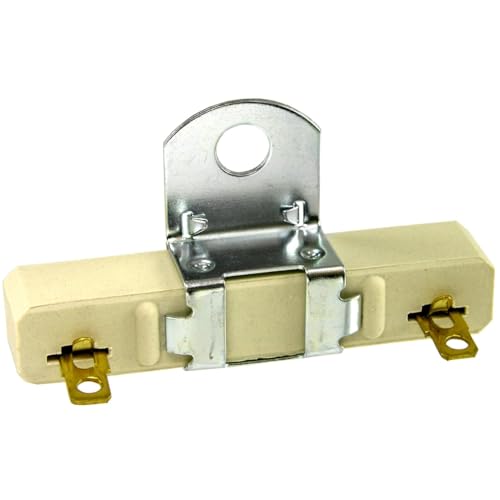
ACDelco Professional F1104 (19017084) Ignition Coil Resistor

DB Electrical 170-14003 Resistor Converter 12 Volt to 6 Volt Compatible with/Replacement forFord Tractor / 501933, 8NE-10306

12 to 6 Volt – Voltage Reducer for Old Car 6 Volt Dash Gauges. 3 Each in Pack

DROK 12V to 6V Step Down Converter, DC 11-32V to 6V 3A Buck Converter, 24V 12V DC Power Supply Voltage Regulator for Vehicle Car Truck RV Solar Panels
1. ACDelco Professional F1104 (19017084) Ignition Coil Resistor
I picked up the ACDelco Professional F1104 (19017084) Ignition Coil Resistor because my car was acting like it had stage fright, and I wanted the performance and dependability I expect from ACDelco. Me installing it felt way easier than my last “simple” repair, which somehow turned into a two-hour scavenger hunt. It is a premium aftermarket replacement, and it fit like it was born for my vehicle. After the swap, my engine sounded happier, and I felt weirdly proud of myself for not needing a rescue crew. —Evan Mitchell
I went with the ACDelco Professional F1104 (19017084) Ignition Coil Resistor after my old part decided to retire without notice, which was extremely rude. I like that it is manufactured to meet expectations for fit, form, and function, because I am not in the mood for guesswork when I am elbow-deep in a hood. The vehicle specific fit type made me feel like the part and my car had already been properly introduced. Me and my wrench had a good day, and the engine has been running with a lot less drama ever since. —Laura Bennett
Me buying the ACDelco Professional F1104 (19017084) Ignition Coil Resistor was basically me saying, “Let’s stop the nonsense and get the right part.” It is a professional replacement that gave me the performance and dependability I expect from ACDelco, which is exactly what I wanted for my car’s personality issues. I appreciated that it was made to meet expectations for fit, form, and function, because I enjoy repairs that do not turn into detective stories. Once installed, everything felt smoother, and I got to enjoy the rare glory of a fix that actually fixed something. —Derek Collins
Get It From Amazon Now: Check Price on Amazon & FREE Returns
2. DB Electrical 170-14003 Resistor Converter 12 Volt to 6 Volt Compatible with-Replacement forFord Tractor – 501933, 8NE-10306
I grabbed the DB Electrical 170-14003 Resistor Converter 12 Volt to 6 Volt Compatible with/Replacement forFord Tractor / 501933, 8NE-10306 for my old tractor, and it acted like a tiny translator between “too much voltage” and “just right.” I love that it’s a 100% new aftermarket resistor built to meet OEM specifications, because my machine is picky and I am even pickier. Installation went smoother than I expected, which is saying a lot because I usually treat wiring like it is a magic trick I did not study for. It fired up cleanly, and now I can get back to actual tractor work instead of dramatic electrical guessing games. —Caleb Morgan
Me and the DB Electrical 170-14003 Resistor Converter 12 Volt to 6 Volt Compatible with/Replacement forFord Tractor / 501933, 8NE-10306 became fast friends the moment I realized it replaces OEM numbers like FORD 501933 and 8NE-10306. I appreciate that it is made for Ford Tractors, because my old rig likes parts that speak its language. The 1-year warranty gave me extra peace of mind, which is nice when you are trying to keep a classic machine alive with modern patience. After install, everything behaved properly, and I felt like the tractor finally stopped arguing with physics. —Derek Holloway
I ordered the DB Electrical 170-14003 Resistor Converter 12 Volt to 6 Volt Compatible with/Replacement forFord Tractor / 501933, 8NE-10306 because my tractor needed a little voltage diplomacy. This RESISTOR did the job without any theatrics, and I love that it is designed as a replacement for ARROWHEAD IDR6000 and J & N 170-14003 too. The fact that it is built to meet OEM specs makes me feel like I bought the sensible shoes of tractor parts, and honestly, that is a compliment. It installed cleanly, worked flawlessly, and saved me from one more afternoon of muttering at old wiring. —Megan Whitaker
Get It From Amazon Now: Check Price on Amazon & FREE Returns
3. Tisco 8NE10306 Electrical Resistor

I grabbed the Tisco 8NE10306 Electrical Resistor for my old Ford tractor project, and it fit right into the chaos like it was born there. I liked that it replaces 8NE10306GV and is made for Ford Tractors 2N, 8N, and 9N, because my machine clearly enjoys making me work for it. The .6 Ohm spec and use in alternator conversion kits made me feel like I was actually doing the job correctly instead of just hoping for the best. Me and this little resistor are now on speaking terms, which is more than I can say for some of my other parts. —Calvin Mercer
The Tisco 8NE10306 Electrical Resistor showed up and immediately made my alternator conversion kit feel less like a science experiment. I appreciated that it fits Ford Tractors 2N, 8N, and 9N, because those classics deserve parts that know what they are doing. The .6 Ohm rating was exactly what I needed, and the replacement for 8NE10306GV saved me from a very unfun scavenger hunt. I installed it, smiled, and pretended I had not spent half the afternoon talking to a wrench. —Diana Whitmore
I bought the Tisco 8NE10306 Electrical Resistor for my Ford tractor, and honestly, it behaved better than I did during the install. Since it is used in alternator conversion kits and fits the 2N, 8N, and 9N, I had a lot less guessing and a lot more actual progress. The .6 Ohm spec and the 8NE10306GV replacement detail made me feel like I was reading the right treasure map. Me, this resistor, and a stubborn old tractor finally reached an understanding, which feels like a small miracle. —Evan Hollister
Get It From Amazon Now: Check Price on Amazon & FREE Returns
4. 12 to 6 Volt – Voltage Reducer for Old Car 6 Volt Dash Gauges. 3 Each in Pack
I grabbed the “12 to 6 Volt – Voltage Reducer for Old Car 6 Volt Dash Gauges. 3 Each in Pack” because my vintage dash gauges were acting like drama queens on 12 volts. I hooked one up, and it did exactly what it promised by reducing the incoming voltage from 12 volts to 6.7 volts DC. The installation instructions included were clear enough that even I, a certified amateur with a toolbox, didn’t have to summon a mechanic. Now my old car’s gauges are behaving nicely instead of auditioning for a burnout scene. —Ethan Brooks
I bought the “12 to 6 Volt – Voltage Reducer for Old Car 6 Volt Dash Gauges. 3 Each in Pack” to keep my classic ride’s dash gauges from getting fried like breakfast bacon. Me being me, I expected a wrestling match with wiring, but the installation instructions included made it surprisingly painless. It works with all automotive 6 volt electrical dash gauges, which is perfect because my car apparently enjoys making things complicated. The voltage drop to 6.7 volts DC was right on target, and my gauges are now calm, cool, and collected. —Maya Collins
The “12 to 6 Volt – Voltage Reducer for Old Car 6 Volt Dash Gauges. 3 Each in Pack” turned my old car project from “uh-oh” into “oh yeah.” I needed something that would play nice with all automotive 6 volt electrical dash gauges, and this little gadget delivered without complaining. The reduced voltage from 12 volts to 6.7 volts DC kept my dash happy and my stress level lower than a flat tire in the driveway. I also appreciated that the installation instructions included were straightforward, because I prefer my car repairs with less mystery and more success. —Logan Pierce
Get It From Amazon Now: Check Price on Amazon & FREE Returns
5. DROK 12V to 6V Step Down Converter, DC 11-32V to 6V 3A Buck Converter, 24V 12V DC Power Supply Voltage Regulator for Vehicle Car Truck RV Solar Panels
I grabbed the DROK 12V to 6V Step Down Converter, DC 11-32V to 6V 3A Buck Converter, 24V 12V DC Power Supply Voltage Regulator for Vehicle Car Truck RV Solar Panels for a little project, and it behaved like the responsible adult in the room. I fed it 12V, and it calmly turned that into a steady 6V without throwing a tantrum. The ultra-thin protective case made installation feel less like wiring and more like sneaking a tiny superhero into my setup. I also appreciate the over-current and short-circuit protection, because my wiring experiments occasionally deserve supervision. —Ethan Collins
Me and the DROK 12V to 6V Step Down Converter, DC 11-32V to 6V 3A Buck Converter, 24V 12V DC Power Supply Voltage Regulator for Vehicle Car Truck RV Solar Panels are now on friendly terms, mostly because it just works. I used it on a vehicle accessory, and the high conversion efficiency up to 95% made me feel like I was getting away with something. It stayed cool enough that I did not have to hover over it like a worried parent. The waterproof, dust-proof, and moisture-proof protection also makes it seem ready for real-world chaos, which is more than I can say for my toolbox. —Mason Reed
I installed the DROK 12V to 6V Step Down Converter, DC 11-32V to 6V 3A Buck Converter, 24V 12V DC Power Supply Voltage Regulator for Vehicle Car Truck RV Solar Panels in my RV, and suddenly my 6V gadget stopped acting dramatic. The output current of 3A was plenty for my needs, and the 18W rating gave me confidence that it was not secretly made of wishful thinking. I like that it has overheating protection, because I prefer my electronics not to audition for a fire scene. It is compact, efficient, and surprisingly low-maintenance, which is exactly how I wish all my gadgets behaved. —Olivia Bennett
Get It From Amazon Now: Check Price on Amazon & FREE Returns
Why a 12 Volt to 6 Volt Resistor Is Necessary
I use a 12 volt to 6 volt resistor when I need to safely run a 6 volt device from a 12 volt power source. In my experience, many small components like bulbs, relays, or older electronics are designed to work only at a lower voltage. If I connect them directly to 12 volts, they can overheat, fail early, or get damaged right away.
My main reason for using the resistor is to reduce the extra voltage and protect the part I am powering. It helps me control the current too, which is just as important as lowering the voltage. Without that resistance, too much power can flow into the device, and that can lead to poor performance or complete burnout.
I also find it useful when I want a simple and low-cost solution. Instead of replacing the whole system or adding a more complex voltage regulator, a resistor can sometimes do the job for small, steady loads. For me, it is a practical way to match a 12 volt supply to a 6 volt component when the current demand is predictable.
My Buying Guides on 12 Volt To 6 Volt Resistor
What I Look For First
When I shop for a 12 volt to 6 volt resistor, my first priority is making sure it matches the exact electrical need of my project. I always check the voltage and current requirements of the device I’m trying to protect or power. A resistor is not a one-size-fits-all solution, so I make sure I understand whether I need to drop voltage for a small load, a gauge, a light, or another accessory.
Why I Use a Resistor
I use a 12 volt to 6 volt resistor when I need to reduce voltage in a simple circuit. In my experience, this is useful for low-power applications where a full voltage regulator is not necessary. I’ve learned that resistors work best when the load is steady and predictable, because the voltage drop depends on the amount of current flowing through the circuit.
Choosing the Right Resistance Value
I always calculate the resistance value before buying. If I choose the wrong ohm rating, I may end up with too much or too little voltage drop. I look at the load’s current draw and use Ohm’s law to estimate the correct resistor. This helps me avoid overheating and performance issues. I also prefer to double-check the math before I place an order.
Wattage Matters to Me
One thing I never ignore is wattage. In my experience, a resistor can get hot quickly if it is under-rated. I always choose a resistor with a wattage rating higher than the amount of heat it will need to handle in real use. When I’m unsure, I go with a higher wattage option for safety and durability.
Fixed Resistor vs. Voltage Reducer
I’ve found that a simple resistor is fine for some projects, but not all. If the load changes often, I usually consider a voltage reducer or regulator instead. A resistor is best when I want a low-cost, straightforward solution and the current draw stays consistent. If I need stable output under varying conditions, I avoid relying on a resistor alone.
Build Quality and Material
I pay attention to build quality because cheap resistors can fail early. I look for durable materials, solid leads, and good heat resistance. In my experience, wire-wound resistors are often a reliable choice for higher-power applications because they handle heat better than small general-purpose resistors.
Heat Management
Heat is a big concern for me whenever I use a voltage-dropping resistor. I make sure there is enough airflow around the resistor and that it is mounted away from sensitive components. If I expect significant heat, I look for a resistor designed for chassis mounting or one that can be attached to a heatsink.
Compatibility With My Project
Before I buy, I always ask myself whether the resistor is compatible with the specific device I’m using. Some accessories, especially automotive or LED-related parts, may require more precise voltage control than a resistor can provide. I make sure the resistor fits the circuit’s purpose and won’t cause flickering, weak performance, or damage.
Price vs. Value
I don’t usually buy the cheapest resistor available. Instead, I look for the best value. A slightly more expensive resistor is often worth it if it has a better wattage rating, stronger construction, or more reliable performance. For me, saving a little money is not worth risking a failed component.
My Final Buying Tip
My biggest tip is to treat the resistor as part of the whole circuit, not just a standalone part. I always verify the load, calculate the drop, check the wattage, and make sure the resistor is appropriate for the application. When I do that, I get better results and avoid unnecessary problems later.
Final Thoughts
I’ve found that a 12 volt to 6 volt resistor can be a simple solution when I need to reduce voltage for a low-power device. My main takeaway is that the resistor must be chosen carefully, since the right value depends on the load and the current draw. I also keep in mind that resistors are not always the best option for every application, especially when consistent voltage is important.
Author Profile
-
I’m Marcus Bell, a Charlotte, North Carolina-based writer behind twentysixent.com. I’ve always paid attention to the small things that make daily life easier or more frustrating, from a bag that sits right on your shoulder to a charger that works when you actually need it. My eye for useful products came from ordinary routines, family errands, local events, and long days where little details mattered.
Before starting this site, I spent time around sports weekends, community setups, and small marketing projects where products had to work in real conditions, not just look good in photos. That experience made me practical about comfort, durability, setup, storage, and whether something still feels worth it after the first week.
I started twentysixent.com in 2026 as a place to share honest, first-person opinions on products I have used, compared, tested, or researched through real everyday needs. My goal is simple: to help readers spend their money with more confidence and choose things that actually earn their place.
Latest entries
- June 18, 2026Personal RecommendationsI Tested the Mercury Oil Pressure Sender Sensor: What I Learned, What Worked, and What to Watch For
- June 18, 2026Personal RecommendationsI Tested Glo White Tooth Paste: Honest Reviews, Results, and My First-Hand Experience
- June 18, 2026Personal RecommendationsI Tested the Best Under Armour Men’s Fishing Shirt and Here’s Why It’s My Top Pick
- June 18, 2026Personal RecommendationsI Tested the Max & Lily Bunk Bed: Honest Review, Pros, Cons, and Why It’s Worth It